

Don’t Like Trimming Your Dog’s Nails? You’re Not Alone …
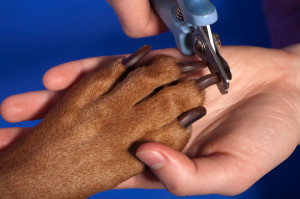 Many people quail at the thought of trimming their dog’s nails. If you have areas of concrete in your yard, or take your dog for a daily walk on the paved sidewalk, you may not have to give much thought to this issue, as your dog probably wears down his own nails.
But for anyone else, it’s important to keep those claws down, and it’s useful to know how to do it yourself!
Giving your dog a bath – no problem. Probably cleaning your dog’s teeth wouldn’t be an issue. But trimming doggie’s nails, no way! Ok, listen up. You can do this. It’s not nearly as difficult or frightening as it seems.
Nail trimming in dogs can be done very easily if you know how. It is a good idea to watch someone else (vet, groomer or friend) who is experienced in nail trimming show you first. Some dogs don’t need to have their nails trimmed. Many will naturally wear the nails down or the dried ends of the nails will simply flake away without you even knowing. But some breeds, especially Basset Hounds and Dachshunds will likely need your help in keeping the toe nails reasonably short. As much as you’ll never want to, you might as well just count on cutting a nail too short on occasion. It just happens sometimes, even with experienced groomers. The nail will bleed if you cut it too short, so just be prepared for that.
Get a good nail trimmer. Ask your vet or the clerk in the pet store which kind they recommend. Place the main part of the trimmer in the palm of your hand and the moveable part is controlled by your fingers. You want to be able to see the small cutting blade that slides when you squeeze the handle.
Make sure you’re not cutting from the top downward; but rather from underneath. Slide the opening over the end of the nail while staying in the whitish part of the nail. The pink area of the nail is the live part and has blood vessels throughout. Hopefully you’ll be able to see where the pink part starts.
If your pooch has dark nails you won’t be able to see any pink to know where the live part of the nail starts. Just do a little bit at a time with the dark nails. Check the end of the nail. The dead area usually is whitish and as you cut deeper into the end of the nail you will begin to see a dark area. That dark area is where the live part starts.
When you are ready to cut, and you are sure you aren’t at the live, pink part of the nail make a smooth, quick squeeze on the handle while holding the trimmer steady. Don’t try to “pop” the end of the nail off; it will fall away on its own. You can file the edges or just let the dog wear the nail smooth. Taking your dog for a walk on the sidewalk or street can help them file down.
Remember that at some point you will cut too short. When this happens, place a tiny piece of tissue paper tightly against the end of the nail and hold it for a few minutes. Better yet, have some cornstarch or flour available and put a small amount against the bleeding end of the nail, hold it there with your finger. This works right away. Or you can do nothing and the bleeding should stop in about five minutes. If it continues to bleed much more than that, give your vet a call.
You can do this. Play with your canine’s feet first to get them used to the idea. If you do it once a week, it won’t seem like such a tragic event. If you can only do one paw a day, that’s ok too. Man’s best friend needs you to do it for him. Relax and enjoy your dog!